Preparing a metal surface properly before welding is an important part of producing a strong and consistent joint. Rust, oxidation, mill scale, oil, grease, paint residue, and other contaminants can interfere with the welding process and may contribute to defects in the finished joint. This is why surface preparation should be treated as an essential step rather than a final cleanup task.
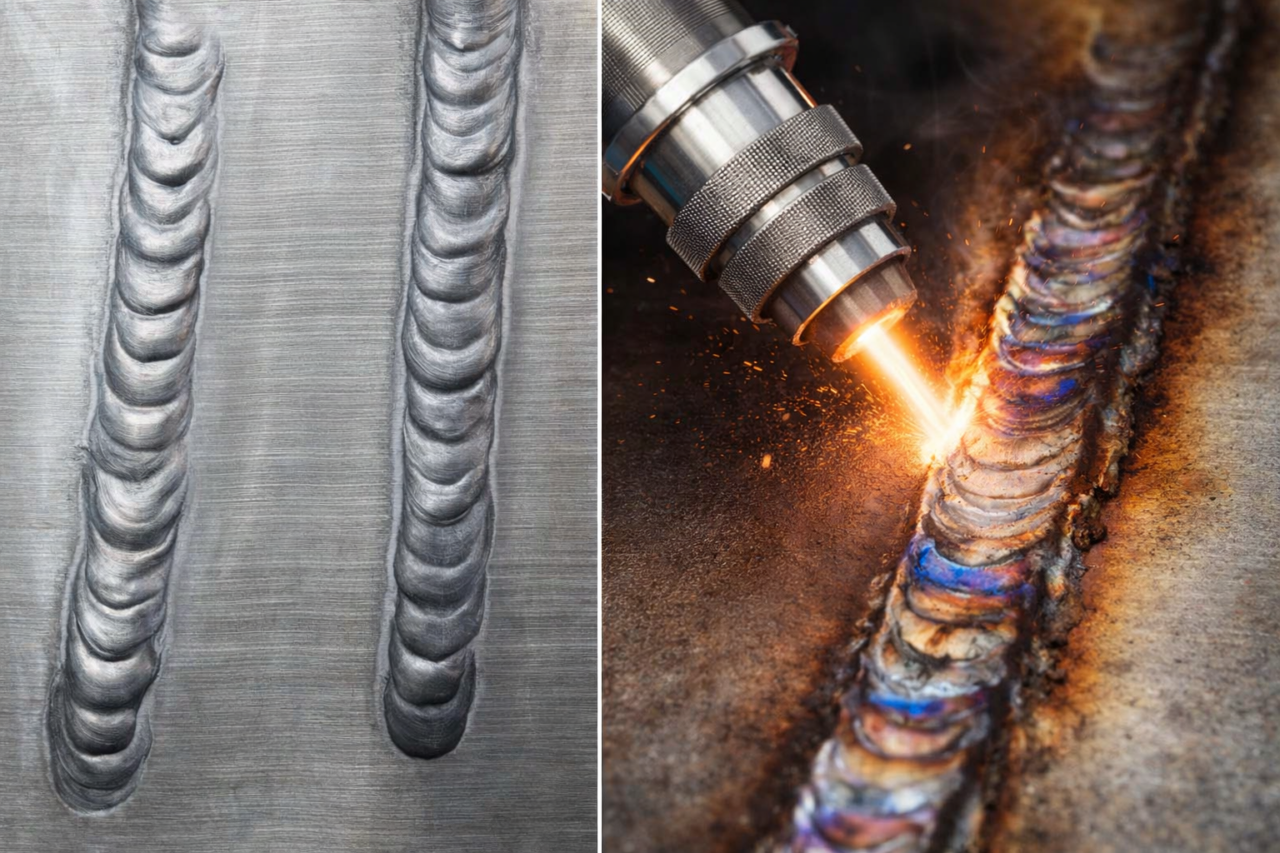
Weld preparation laser cleaning provides a precise way to remove unwanted surface contaminants before welding. Instead of relying only on abrasive tools or chemical cleaners, laser cleaning uses a controlled beam of laser energy to target contamination on the metal surface.
For fabricators, manufacturers, maintenance teams, and welding professionals in Waterloo, New York, and surrounding areas, laser cleaning can offer a practical approach to preparing metal components while reducing the need for some traditional cleaning processes.
What Is Weld Preparation Laser Cleaning?
Weld preparation laser cleaning is a surface-cleaning process used to prepare metal before welding. A laser beam is directed across the area that will be welded, where its energy interacts with unwanted material on the surface.
Depending on the material, contamination, and equipment settings, the process can remove substances such as:
- Rust and light corrosion
- Oxide layers
- Mill scale
- Oil and grease
- Paint and coating residue
- Manufacturing residue
- Dirt and surface deposits
- Heat-related discoloration
The objective is not simply to make the metal look cleaner. Proper preparation creates a more suitable surface for the welding operation.
Laser parameters need to be selected according to the material and the type of contamination being removed. Excessive energy or unsuitable settings can affect the underlying material, so testing and proper process control are important.
Why Surface Preparation Matters Before Welding
Welding creates intense heat that melts and joins metal. Anything left on the surface can interact with this process.
For example, oil, grease, moisture, coatings, and oxidation can produce unwanted gases or interfere with the molten weld pool. Oxides and scale can also prevent the welding process from interacting consistently with the underlying metal.
Poor surface preparation may contribute to issues such as:
- Porosity
- Inclusions
- Inconsistent fusion
- Surface defects
- Unstable welding conditions
- Additional rework
- Difficult inspection results
Research has also examined laser surface cleaning as a way to reduce contamination-related porosity during welding, showing why surface preparation can be important for weld quality.
A clean welding area gives the welding process a more consistent starting point.
How Weld Preparation Laser Cleaning Works
Laser cleaning uses focused laser energy to interact with contamination on the surface. The unwanted layer absorbs the energy differently from the underlying metal, allowing the contamination to be loosened, removed, or vaporized depending on the process conditions.
The operator controls important parameters such as laser power, scanning speed, frequency, focus, and pattern. These settings can be adjusted according to the material and the condition of the surface.
For example, light oxidation may require a different approach from heavy rust or thick mill scale. Likewise, stainless steel, carbon steel, aluminum, and other metals can require different cleaning parameters.
A typical weld preparation process may include:
- Inspecting the metal surface.
- Identifying the type and thickness of contamination.
- Selecting suitable laser parameters.
- Cleaning the weld area and surrounding surface.
- Inspecting the cleaned area.
- Proceeding with the welding operation.
This controlled approach makes laser cleaning useful when consistent preparation is important.
What Contaminants Can Be Removed Before Welding?
One of the main advantages of laser cleaning is its ability to address several types of surface contamination.
Rust and Corrosion- Rust can form when metal is exposed to moisture and oxygen. Even light corrosion can affect the condition of the surface that needs to be welded.
Laser cleaning can be used to target rust and oxidation while leaving the base material available for the next manufacturing step.
Mill Scale- Mill scale is an oxide layer commonly found on steel after hot rolling. It can create an unwanted barrier between the welding process and the underlying metal.
Removing mill scale from the weld area can provide a cleaner surface for welding preparation.
Oil and Grease- Metal components may collect machining oil, cutting fluids, grease, fingerprints, and other residues during manufacturing or handling.
These contaminants should be removed before welding because they can affect the welding environment. Laser cleaning can be used for targeted removal of certain organic residues, depending on the material and process settings.
Paint and Coating Residue- Some metal components contain coatings that need to be removed from a specific welding area before fabrication or repair.
Laser cleaning can selectively remove coatings from defined areas, reducing the need to clean an unnecessarily large section of the component.
Oxidation and Surface Deposits- Oxidation can develop during storage, handling, heating, or previous processing. Laser cleaning can target these unwanted layers to create a cleaner surface for welding.
Benefits of Weld Preparation Laser Cleaning
Precise Surface Cleaning- Laser cleaning is a targeted process. Instead of applying an abrasive material across the entire component, the laser can be directed toward the areas that require preparation.
This can be particularly useful for weld seams, edges, joints, grooves, and other defined areas.
No Direct Contact With the Surface- Traditional grinding and brushing require physical contact with the workpiece. Laser cleaning is a non-contact process.
Because there is no grinding wheel or brush directly rubbing against the metal, the process can reduce mechanical contact with the surface.
Reduced Abrasive Consumption- Grinding wheels, abrasive discs, and brushes are consumable products. They wear down during use and need to be replaced.
Laser cleaning does not depend on abrasive media in the same way, which can help reduce the amount of consumable cleaning material required for certain applications.
Less Mechanical Surface Alteration- Abrasive preparation can remove material along with contamination. With properly selected laser parameters, laser cleaning can target the unwanted surface layer more selectively.
The exact result depends on the laser system, material, contamination, and operating parameters, so application testing remains important.
Consistent Preparation- Repeatability is valuable in production environments. A controlled laser process can be configured to follow a consistent cleaning pattern and set of parameters.
This can help create a more uniform preparation process from one component to another.
Targeted Cleaning- Not every part of a component needs to be cleaned before welding. Laser cleaning can focus on the areas where preparation is required.
This makes it suitable for applications where selective cleaning is more practical than cleaning an entire component.
Laser Cleaning vs. Traditional Weld Preparation
Traditional methods such as grinding, wire brushing, abrasive blasting, and chemical cleaning can still be useful for many applications. However, each method has its own limitations.
Grinding can be effective for removing heavy contamination but may alter the surface profile and requires abrasive consumables.
Wire brushing can remove lighter contamination but may not be suitable for every type of oxide or coating.
Abrasive blasting can clean larger areas efficiently, but it introduces abrasive media into the process and may not be ideal when highly selective cleaning is required.
Chemical cleaning can remove certain contaminants effectively, but it involves handling and managing cleaning chemicals.
Laser cleaning offers another option. It provides non-contact, targeted cleaning and can be integrated into manufacturing or maintenance processes where precision is important.
The best cleaning method depends on the component, material, contamination, production requirements, and required cleanliness level.
Applications for Weld Preparation
Weld preparation laser cleaning can be considered for a range of metalworking applications.
Metal Fabrication- Fabrication shops can use laser cleaning to prepare specific areas of metal components before welding.
Manufacturing- Manufacturers working with repeated production components may benefit from a controlled cleaning process that can be standardized.
Equipment Repair- Before repairing machinery or metal structures, contaminants and corrosion may need to be removed from the welding area.
Automotive and Industrial Components- Metal parts used in industrial and automotive applications can require controlled surface preparation before welding, particularly when manufacturing residue or oxidation is present.
Maintenance and Restoration- Maintenance teams can use targeted cleaning when only a particular area of a component requires preparation before repair work.
Why Choose Laser Cleaning for Weld Preparation?
The main reason to consider laser cleaning is control. Welding preparation is not only about removing visible dirt. The goal is to create a suitable surface without unnecessarily affecting the component.
A properly configured laser cleaning process can provide:
- Targeted contamination removal
- Non-contact operation
- Reduced dependence on abrasives
- Repeatable cleaning patterns
- Precise treatment of weld areas
- A cleaner starting surface for welding
For businesses and industrial operations in Waterloo, New York, the right cleaning method will depend on the material, welding procedure, surface condition, and production requirements.
Before adopting laser cleaning for a specific application, it is sensible to evaluate the material and contamination and perform a controlled test. This helps determine whether the selected laser settings achieve the required level of surface preparation without damaging the substrate.
Important Considerations Before Laser Cleaning
Laser cleaning is not a one-setting-fits-all process. Different metals and contaminants respond differently to laser energy.
The operator should consider:
- Base material
- Surface condition
- Type of contamination
- Contamination thickness
- Required cleaning level
- Laser wavelength and power
- Pulse characteristics
- Scanning speed
- Working distance
- Welding requirements
Safety is also essential. Industrial laser systems should be operated according to the equipment manufacturer’s instructions and applicable workplace safety requirements. Appropriate laser safety controls and personal protective equipment should be used for the specific system and application.
Final Thoughts
A clean surface is an important starting point for reliable welding. Removing rust, oxidation, mill scale, oil, grease, coatings, and other unwanted materials can help create more consistent conditions before the welding operation begins.
Weld preparation laser cleaning provides a modern, precise, and non-contact approach to surface preparation. Its ability to focus cleaning on selected areas makes it useful for fabrication, manufacturing, maintenance, and repair applications.
For operations in Waterloo, New York, and across the USA, laser cleaning can be considered when traditional surface preparation methods are creating unnecessary material removal, abrasive waste, labor, or inconsistent results.
The right solution ultimately depends on the metal, contamination, welding process, and required surface condition. With appropriate testing and laser parameters, laser cleaning can become a valuable part of a controlled weld preparation workflow.
FAQ
1. What is weld preparation laser cleaning?
It is a laser-based process used to remove contaminants such as rust, oxidation, oil, grease, and coatings from metal before welding.
2. Can laser cleaning remove rust before welding?
Yes. Laser cleaning can be used to remove rust and oxidation from suitable metal surfaces before welding, depending on the material and laser settings.
3. Does laser cleaning damage the metal?
When the correct parameters are selected for the specific material and contamination, the process can selectively remove unwanted surface layers. Testing is recommended before production use.
4. Is laser cleaning better than grinding?
It depends on the application. Laser cleaning provides non-contact, targeted cleaning, while grinding may be more suitable for some heavy material-removal jobs.
5. Can laser cleaning be used for industrial welding preparation?
Yes. It can be used for various industrial metal preparation applications, provided the laser system and parameters are appropriate for the material and required cleaning level.